The Attorney General supplies Consumer Signals to notify the general public of unfair, misleading, or misleading company practices, and to offer info and assistance on other problems of issue. Consumer Alerts are not legal advice, legal authority, or a binding legal opinion from the Department of Attorney General. Reverse home loans have ended up being a progressively popular option for seniors who need to supplement their retirement earnings, spend for unexpected medical costs, or make required repair work to their homes.
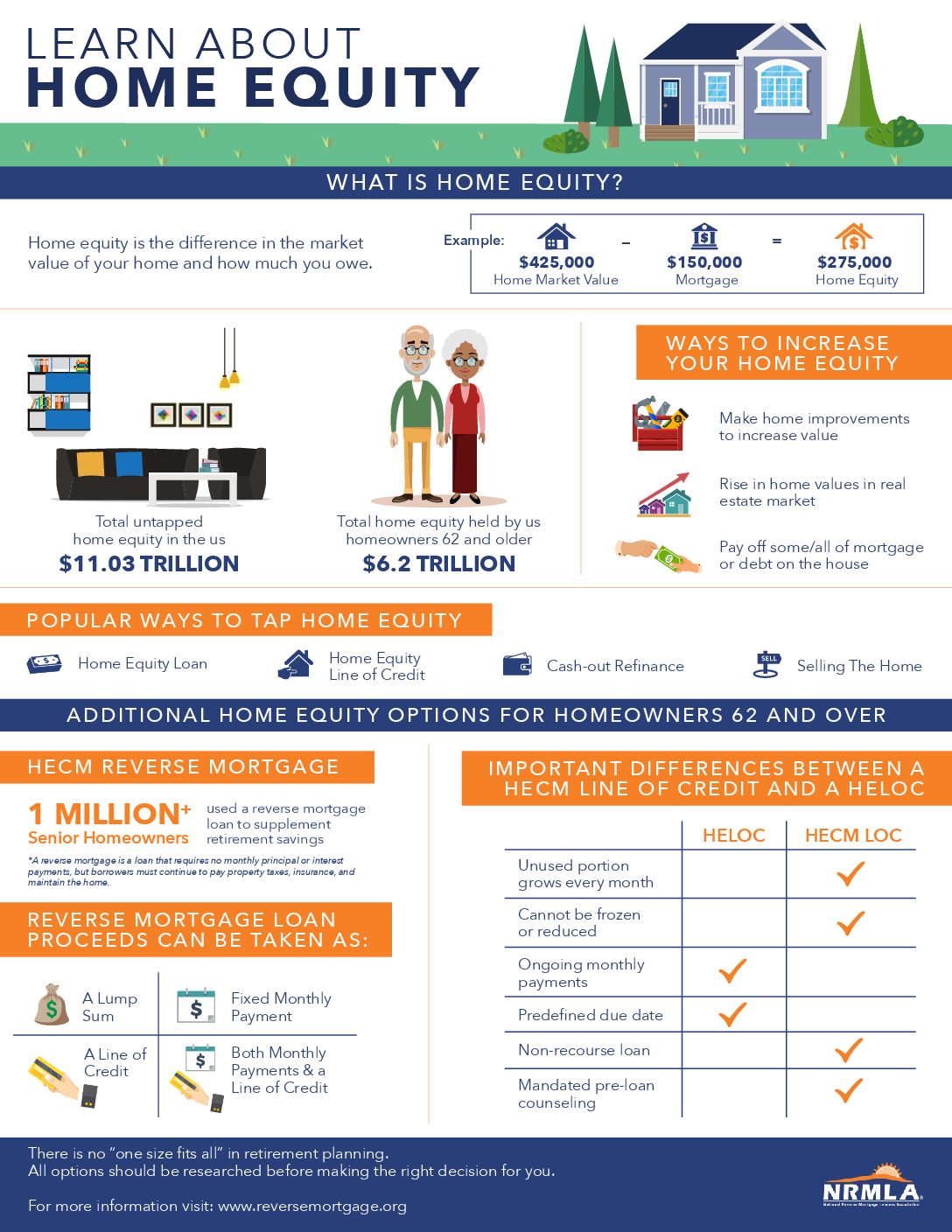
Reverse home loans permit property owners to convert equity in their home into money, while maintaining ownership. Equity is the difference in between the market worth of your home and the amount you owe on your mortgage. The reverse home mortgage gets its name because instead of making month-to-month loan payments to your lending institution, you get payments from your lending institution.
Although you are not responsible for making monthly payments on the loan, because you remain the owner of the house, you continue to be accountable for paying property taxes, keeping property owners insurance, and making required repairs. The HECM is the most popular reverse home loan. HECMs are guaranteed by the Federal Housing Administration (FHA), which is part U.S.
The FHA guarantees that lending institutions will meet their obligations. HECMs are just used by federally-approved lending institutions, who are required to follow rigorous rules enforced by the federal government. The FHA informs HECM lending institutions just how much they can lend you, based upon your age and your home's worth. Even more, you must go through reverse home loan therapy as a condition to obtaining this type of loan. what percentage of mortgages are fha.
The Basic Principles Of What Happens To Mortgages In Economic Collapse
Department of Real Estate and Urban Development's site. Payments got through these reverse mortgages can just be utilized for certain purposes, such as house repair work, house improvements, or paying home taxes. These kinds of reverse mortgages are offered by state and regional governments, or nonprofit lenders, and are normally the least pricey reverse home mortgages.
Some banks and banks use their own reverse mortgages. These loans are backed by the private business that provide them; they are NOT guaranteed by the federal government (what are basis points in mortgages). In order to certify for many reverse home loans: You and any other customers on the reverse home mortgage need to be at least 62 years of age.
Eligible property types consist of single-family homes, 2-4 system owner-occupied residential or commercial properties, made homes, condominiums, and townhouses. You must either pay off the old mortgage debt before you get a reverse mortgage, or pay off the old mortgage financial obligation with the cash you receive from a reverse home loan. There are no minimum possession, earnings, or credit requirements to qualify for a lot of reverse mortgages.
Costs consist of those associated with loan origination, home mortgage insurance premiums, closing expenses, and month-to-month maintenance fees. These costs are often greater than the costs connected with standard mortgages and house equity loans. Make sure you understand all the expenses and charges associated with the reverse mortgage. Be mindful that if you choose to finance the expenses connected with a reverse home loan, they will increase your loan balance Additional resources and accrue interest throughout the life of the loan.
The Ultimate Guide To Which Credit Report Is Used For Mortgages
Your reverse mortgage loan provider may include other conditions that will make your reverse home loan payable, so you should check out the loan files thoroughly to ensure you understand all the conditions that can trigger your loan to become due. The amount you will owe on your reverse home mortgage will equate to all the loan advances you got (including advances utilized to fund the loan or to settle prior financial obligation), plus all the interest that accumulated on your loan balance.
With a lot of reverse mortgages, you can never owe more than your home deserves. The technical term for this cap on your financial obligation is a "non-recourse limit." It implies that the lender, when seeking repayment of your loan, usually does not have legal recourse to anything aside from your house's value and can not seek payment from your successors.
Speak with an independent monetary advisor to learn what reverse mortgage package best suits your financial circumstance and needs. If you do not have a financial consultant, discuss your scenario with a counselor authorized by the United States Department of Real Estate & Urban Development (HUD); HUD-approved therapy firms are readily available to help you with your reverse home loan concerns.
Make certain you comprehend all the costs and charges connected with the reverse mortgage. Discover out whether the reverse home loan you are thinking about is federally-insured. This will safeguard you when https://penzu.com/p/7a2985a5 the loan comes due. Discover out whether your payment commitment is restricted to the value of your house at the time the loan ends up being due.
What Type Of Mortgages Are There - An Overview
Be cautious of anybody who tries to press Informative post you into a choice that you are not entirely comfortable with, such as investing the payments from your reverse home mortgage into an annuity, insurance coverage, or other investment item, or pressing you into receiving a lump-sum payment over monthly payments. If you are uneasy with the reverse mortgage that you got in into, exercise your right of rescission within three days of the closing.
Go To the Attorney general of the United States's site to learn more about reverse home loans and other concerns of interest to senior citizens (what credit score do banks use for mortgages). Consumers might get in touch with the Lawyer General's Customer Security Department at: Consumer Protection DivisionP.O. Box 30213Lansing, MI 48909517-335-7599Fax: 517-241-3771Toll totally free: 877-765-8388.
/ Reverse Home Mortgage Downsides and Benefits: Your Guide to Reverse Home Mortgage Pros and ConsFor many individuals, a Reverse Home Home mortgage is a great way to increase their financial well-being in retirement positively impacting lifestyle. And while there are various advantages to the item, there are some drawbacks reverse mortgage downsides.
Nevertheless, there are some downsides The upfront fees (closing and insurance coverage costs and origination costs) for a Reverse Mortgage are thought about by many to be rather high partially higher than the expenses charged for re-financing for example. In addition, FHA program modifications in Oct-2017 increased closing costs for some, however ongoing servicing costs to hold the loan decreased for all.
The Only Guide for What Are The Interest Rates On Mortgages
For more details on the fees charged on Reverse Home loans, seek advice from the Reverse Mortgage rates and fees short article. Also, if charges issue you, try talking with several Reverse Mortgage lenders you may find a better offer from one over another. There are no regular monthly payments on a Reverse Home loan. As such, the loan amount the amount you will eventually need to repay grows bigger with time.
Nevertheless, the amount you owe on the loan will never ever surpass the worth of the home when the loan ends up being due. Many Reverse Home loan customers value that you do not need to make monthly payments and that all interest and charges are financed into the loan. These functions can be viewed as Reverse Mortgage downsides, however they are likewise huge advantages for those who wish to remain in their home and enhance their immediate finances.